Game Development Portfolio
This portfolio will go through the related projects I've worked on in game development courses such as PCG, Game AI, etc.
Procedural Content Generation Projects
Projects from PCG coursework exploring generated environments, plants, flocking, and creatures.
Terrain Generation
In this project I generated terrain in Unity, where I learned about procedural landscape variation through adjustable generation parameters and real-time iteration. Basically I wanted to make big maps like minecraft but lacked the graphics resources and skills (sob).
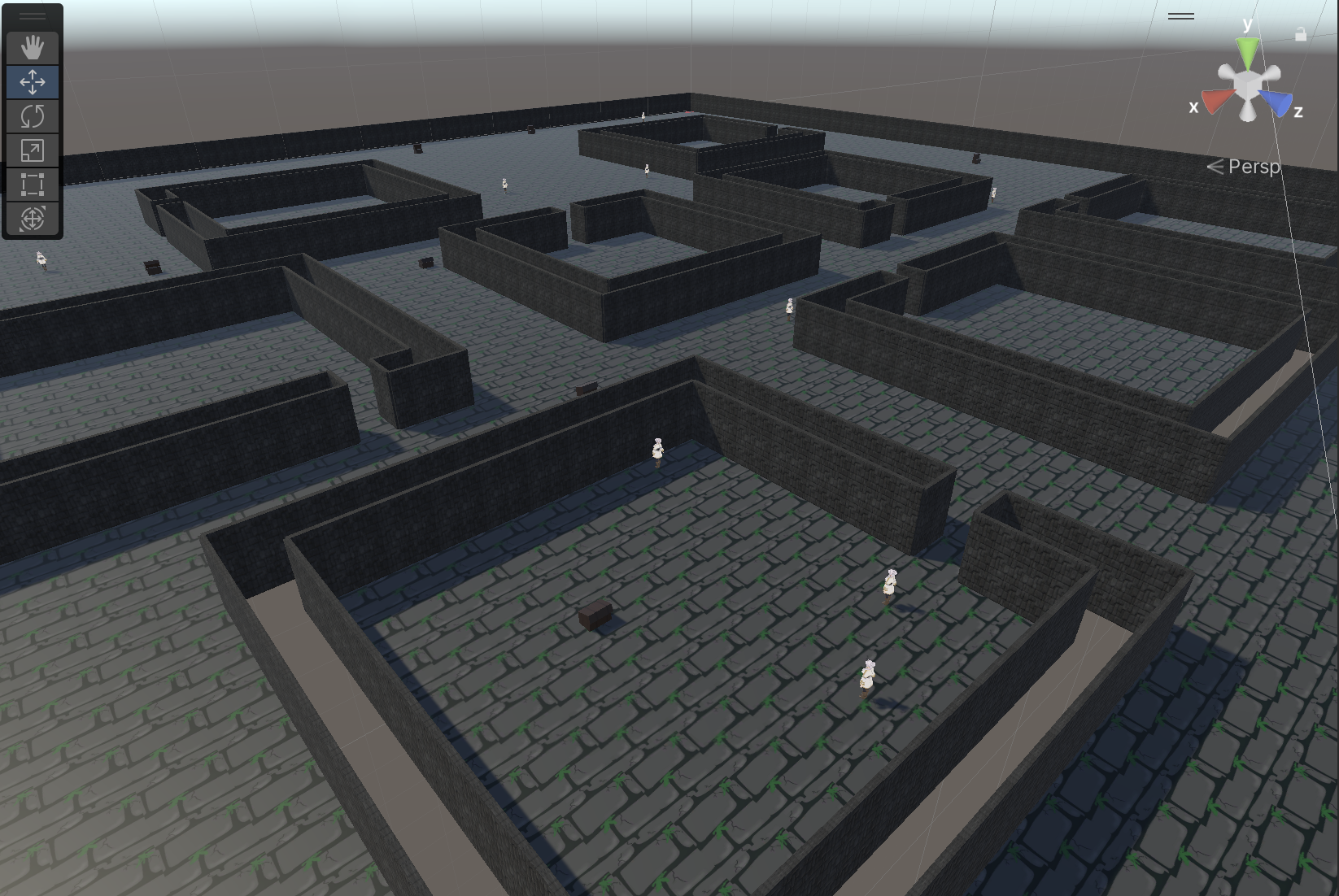
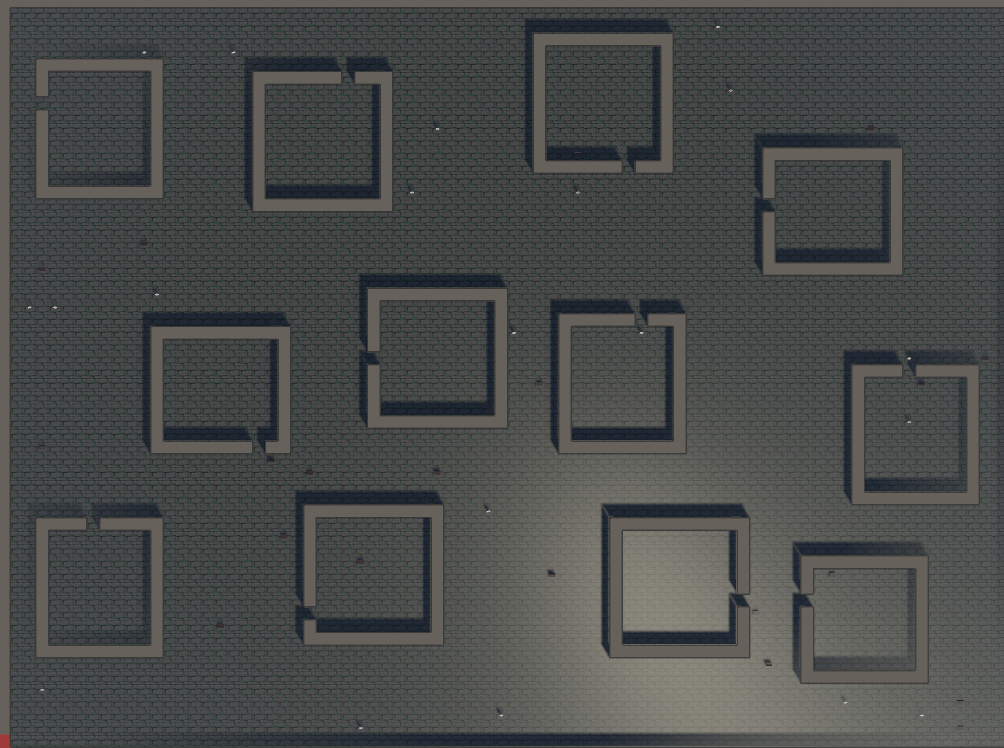
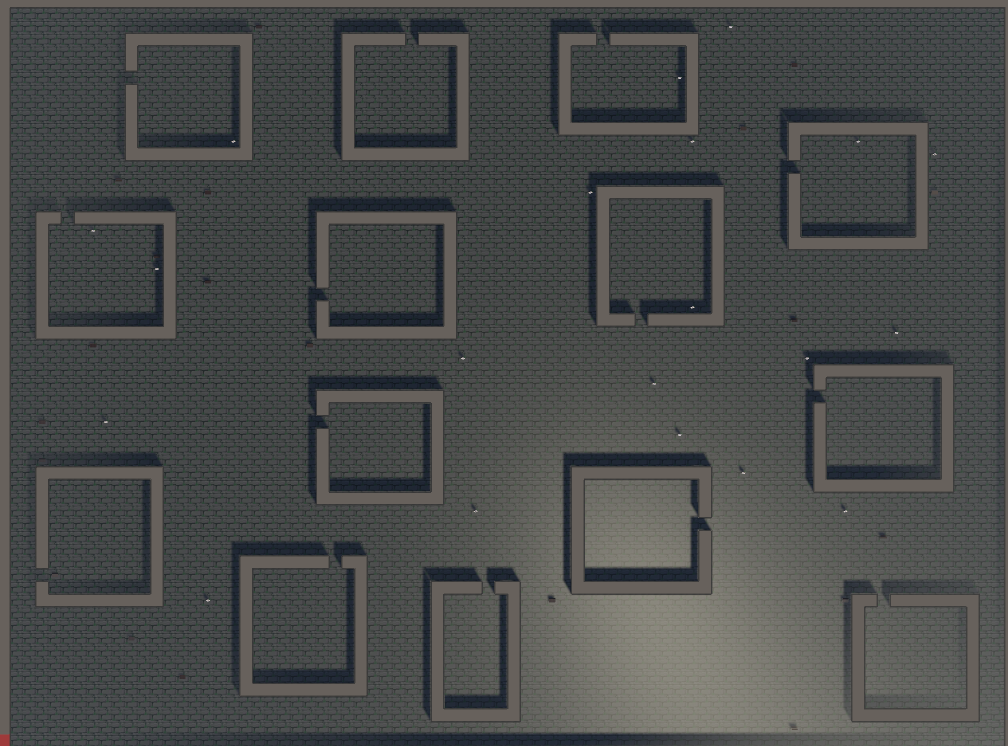
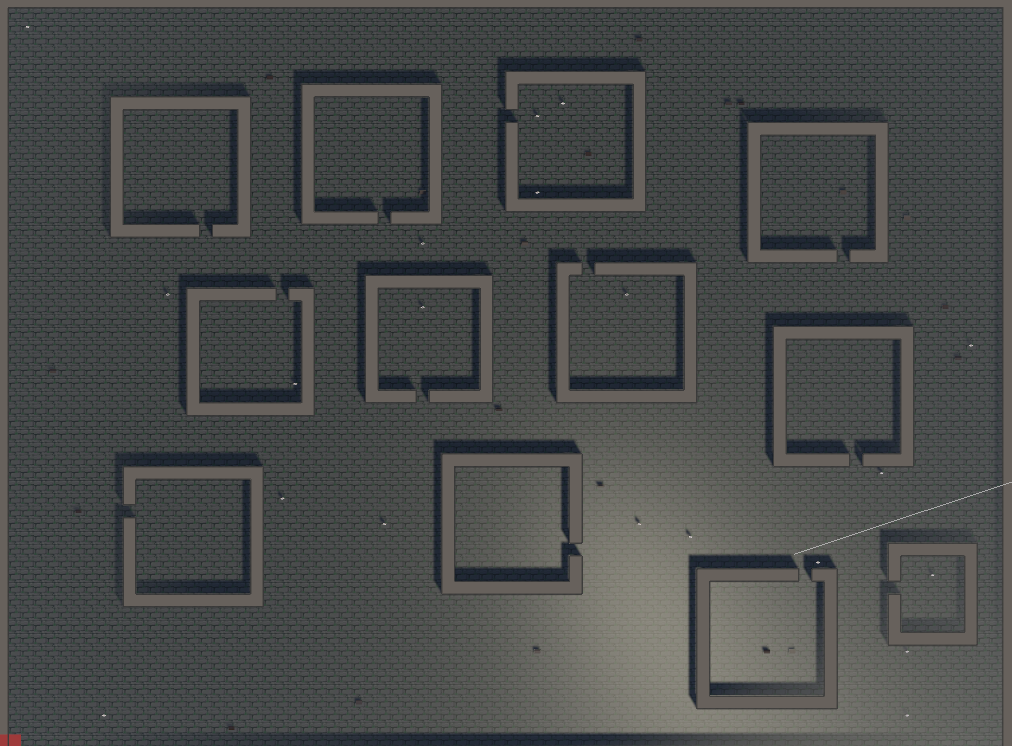
PCG Dungeon Generation
In this project I generated dungeon layouts by placing non-overlapping rooms, then using the remaining space as hallway areas. I don't play a lot of games with dungeons but the skills I learned from this project can be applicable to a wide range of games like the minesweeper one. Dungeons with different floors that are 3d would be also cool to generate but it would require more tweaking.
Tree & Plant Generation
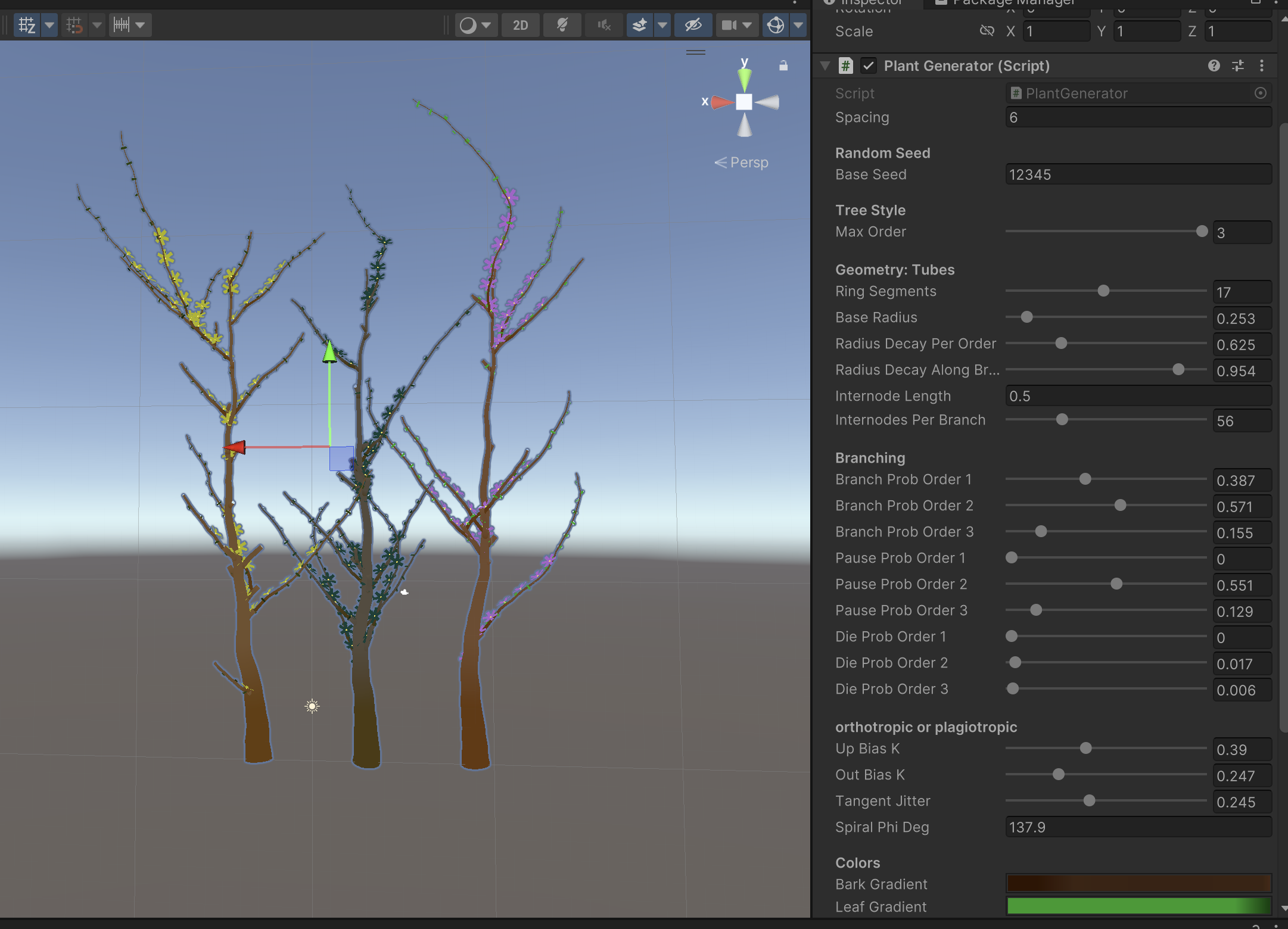
I worked on this project that lets users procedurally generate trees with flowers or leaves based on adjustable parameters, including seed values, branching probabilities, radius decay, internode length, branch order, and color gradients. This is more realistic than minecraft trees and can even vary in shape based on botanical groups. I also made a option to have flowers or leaves.
Flocking Simulation
I worked on a project that implements flocking behavior with local steering rules, producing coordinated group motion from simple agent-level interactions. The clip is sped up to show the simulation dynamics more clearly. You can see that when the fish get closer to each other they form a flock and once they are in a flock they move together in random directions inside the water.
Creature Generation
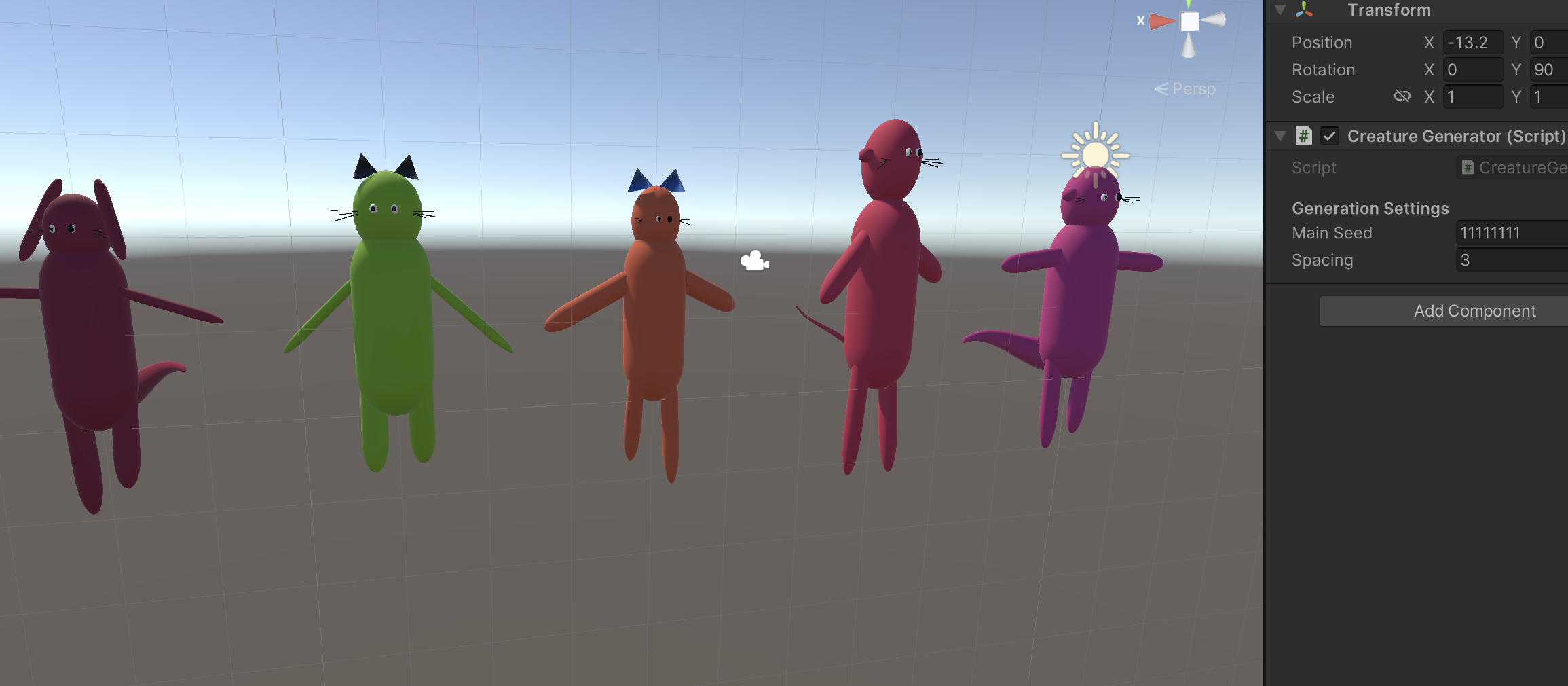
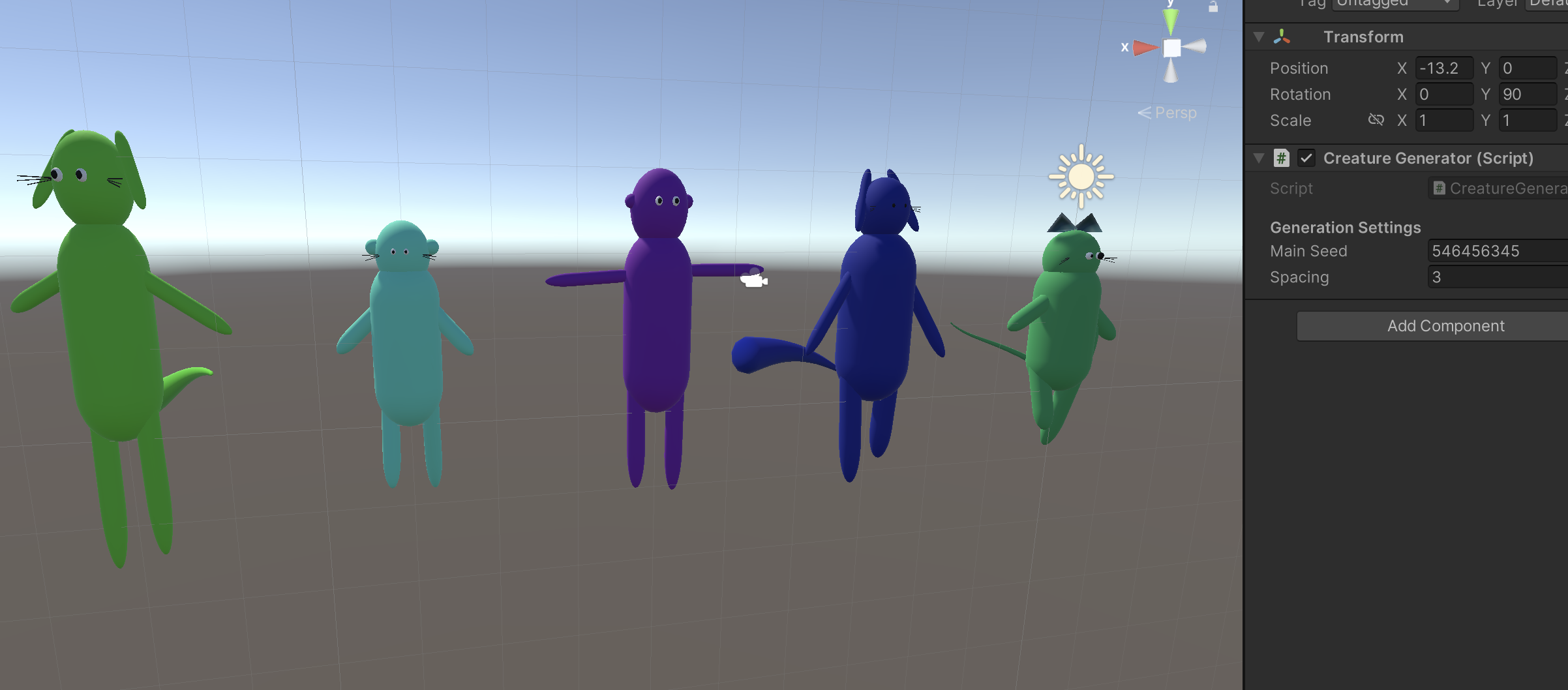
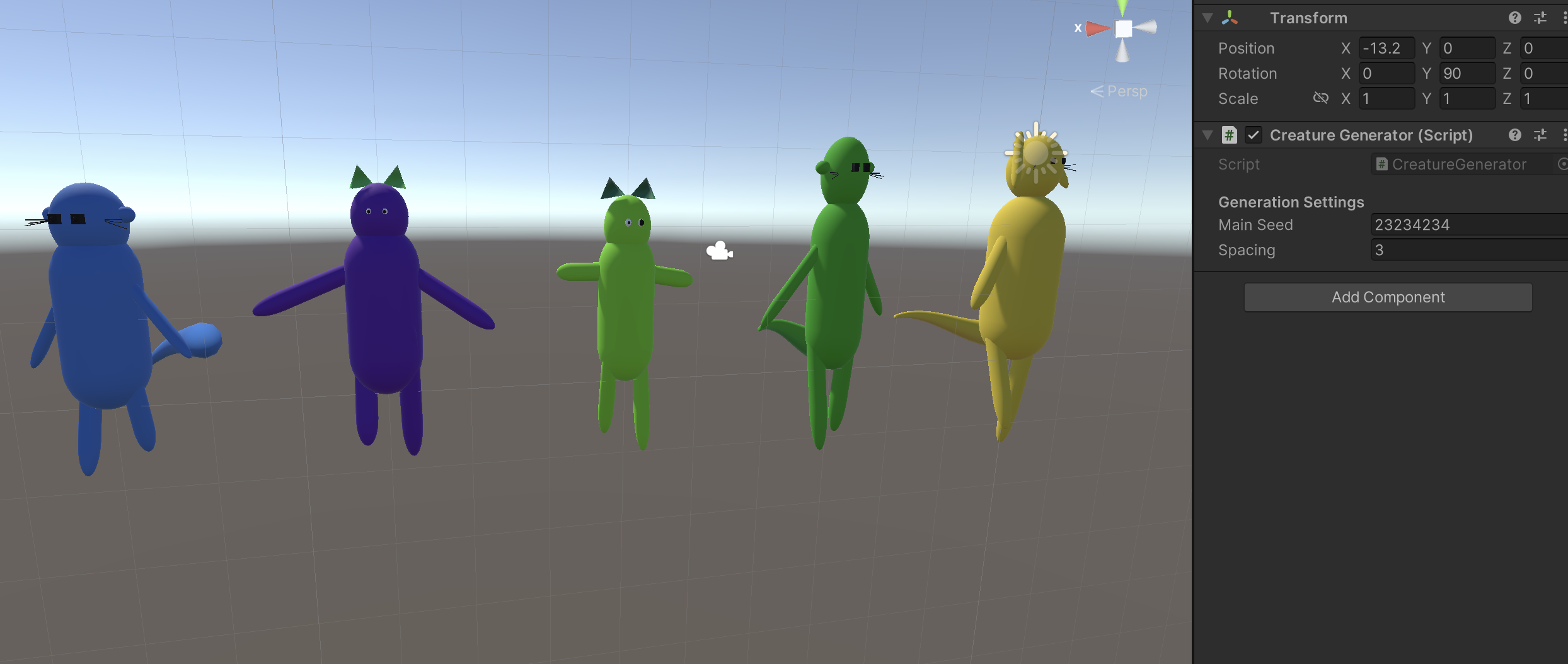
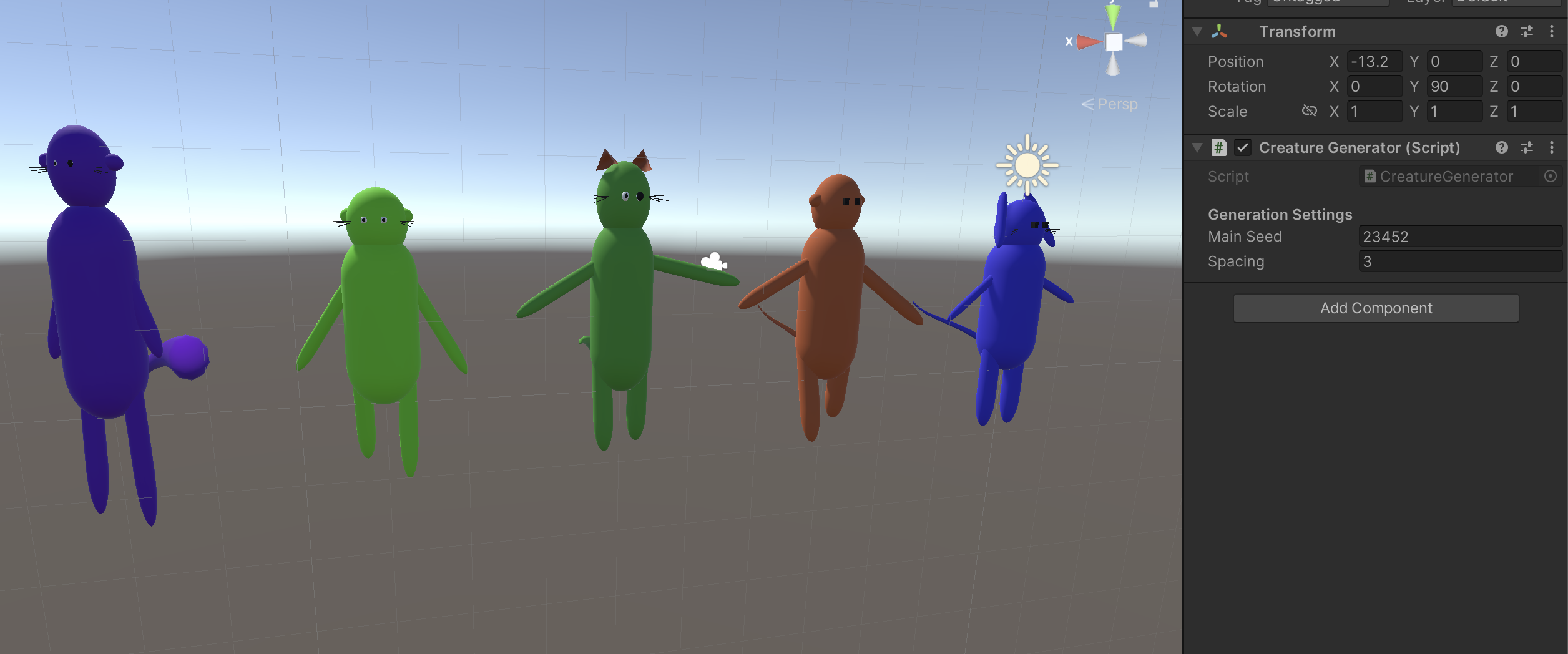
In this project I generated stylized creature variations from seed-driven parameters, changing body proportions, ears, tails, limbs, facial features, accessories, and color palettes. This is kind of inspired from other games where you can make really dynamic monster characters based on your taste, but the rendenring for that will be slightly harder than what I did here. Randomly generated creatures could also be useful when making NPCs.
Game AI Projects
Fuzzy Logic Racetrack AI
I developed a fuzzy-logic vehicle controller to simulate driving behavior under dynamic track constraints.
Path Planning & Navigation
I implemented grid navigation, path networks, A* pathfinding, and navigation mesh generation for AI movement.
Team AI Behavior
I worked with finite state machines and agent decision logic for team behavior in a Unity dodgeball environment.